Iran’s strategy under pressure: Deterrence and diplomacy
MADRID – The latest American military build-up in the Persian Gulf was intended to deliver a familiar message: Overwhelming force was presented as a prelude to political submission.
Aircraft carriers, missile batteries, and forward deployments were meant to clarify Washington’s terms: capitulation or confrontation. Tehran, however, has responded neither with retreat nor with theatrical defiance. Instead, it has pursued a calculated strategy that combines credible deterrence with controlled diplomacy. Far from being paralyzed by coercion, Iran has sought to reshape the strategic environment in which pressure is applied.
Iran’s response has unfolded along two parallel tracks. The first has been overt and deliberately unambiguous. Tehran rejected negotiations conducted under threat, mobilized its armed forces, and carried out military exercises designed to signal readiness rather than bravado. Supreme Leader Ayatollah Ali Khamenei’s message was precise. Any attack on Iran would not remain limited or localized.
It would escalate into a regional conflict, imposing military and economic costs on all states, facilitating American action. This was not rhetorical excess. It was a strategic warning grounded in Iran’s conventional capabilities and regional reach. Its purpose was to alter risk calculations in Washington and allied capitals by making escalation appear uncontrollable and prohibitively expensive.
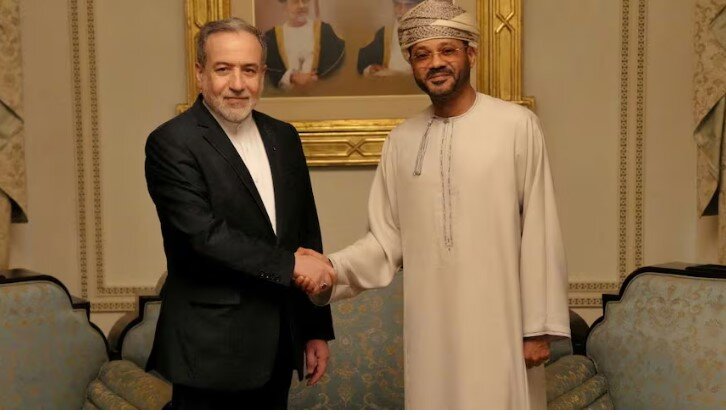
At the same time, Iran pursued a sustained diplomatic initiative. Senior officials engaged counterparts in Moscow, Ankara, and across the region. These efforts were not undertaken from a position of weakness but as a demonstration of foresight. Tehran sought to exhaust diplomatic channels while reinforcing a consistent message. Iran does not seek war, but it will defend its sovereignty if forced to do so. This dual posture, military firmness combined with diplomatic outreach, allowed Iran to retain strategic initiative and compelled external actors to treat it as a consequential decision-maker rather than a passive target.
There are indications that this approach may be generating limited results. Reports suggest the possibility of direct talks between Iranian and American officials, potentially facilitated by Turkey and Qatar. Resistance, if paired with disciplined diplomacy, can create space for engagement on more balanced terms.
Within Iranian policy circles, the parameters of any negotiation are already well defined. This sequencing reflects both pragmatism and experience. The nuclear file remains the most immediate source of tension, but it is also the only domain in which Tehran sees scope for a transactional arrangement.
Iran’s insistence that negotiations remain confined to the nuclear question is not tactical obstinacy. It is rooted in the lessons of recent history. The collapse of the 2015 nuclear agreement following the United States’ unilateral withdrawal reinforced deep skepticism toward expansive agendas. Two demands are categorically excluded.
The first is zero enrichment, which Tehran views as incompatible with its rights under the Nuclear Non-Proliferation Treaty and as a symbolic attempt to enforce technological subordination. The second is any discussion of Iran’s ballistic missile program.
From Tehran’s perspective, the missile arsenal is not an auxiliary capability but the foundation of its national defence doctrine. In a region saturated with advanced weaponry and shaped by the trauma of the eight-year war with Iraq, during which Iran endured strategic bombardment while largely isolated from international arms markets, missile capability represents the ultimate deterrent against external coercion. It is the equalizer that compensates for conventional asymmetries. To treat it as a bargaining chip would be to misunderstand its role entirely.
This logic leads to a stark conclusion. For Iran’s leadership, the choice is not between accommodation and conflict, but between vulnerability and survival. Surrendering the missile program would amount to unilateral disarmament of the state’s primary deterrent. Faced with that alternative, a military confrontation, even one with devastating consequences, may appear the lesser existential risk. No sovereign state can be expected to voluntarily dismantle the core architecture of its security.
Yet the dynamics shaping Iran’s response extend beyond material calculations. The American military presence surrounding Iran is not merely a tactical pressure point. It is perceived as a psychological and existential challenge, an attempt to force submission rather than alter behavior. Understanding Iran’s reaction requires engagement with the concept of ontological security, the need of states, like individuals, to preserve a coherent sense of self.
Ontological security is distinct from physical survival. It concerns the continuity of identity, the narratives through which a state understands its past, legitimizes its institutions, and projects itself into the future. For the Islamic Republic, this narrative is deeply embedded. It draws on Iran’s civilizational continuity, its experience of foreign intervention in the twentieth century, and the revolutionary rupture of 1979, which enshrined independence from external domination as a foundational principle.
Iran’s political routines, diplomatic language, and military doctrine reinforce this self-conception. The state defines itself as a resistant actor operating within, yet fundamentally at odds with, an international order it views as hierarchical and unjust. A military attack, however destructive, fits within this narrative. It would be interpreted as confirmation of long-held assumptions about external hostility, likely consolidating domestic cohesion and reinforcing the legitimacy of the state as a defender of national dignity.
Capitulation under threat, by contrast, would constitute an ontological rupture. Yielding to coercive demands would undermine the very identity on which the system rests. It would transform Iran from an agent shaping its own history into an object of another power’s will. Such an outcome would pose a greater threat to its legitimacy than material damage inflicted by war. The Islamic Republic’s social contract is premised primarily on the preservation of sovereign dignity. Violating that contract risks internal de-legitimation.
This ontological imperative explains Tehran’s insistence on fairness as a precondition for dialogue. The term is not rhetorical. A negotiation perceived as structurally unequal, conducted under overt coercion, would force Iran into the role of a supplicant, a posture incompatible with its self-narrative. For talks to be politically viable, they must be framed as a reciprocal, juridically bounded exchange between equals, not as compliance with imposed demands.
The rigidity surrounding the missile program follows the same logic. From an external perspective, it may appear negotiable. From within Iran’s strategic self-understanding, it is constitutive. The missile arsenal is the material embodiment of esteghlal, the guarantee that Iranian sovereignty cannot be vetoed. To relinquish it under threat would not be a concession, but a symbolic act of self-erasure.
The present impasse, therefore, is deeper than a dispute over enrichment levels or verification timelines. It reflects a collision between coercive diplomacy, designed to extract behavioral change through pressure, and a state whose paramount security concern is the preservation of identity. Any viable diplomatic off-ramp must account for this reality. It would require a narrow agenda focused on the nuclear file alone and structured as a reciprocal exchange of verifiable limits for durable sanctions relief.
Whether such a framework is politically acceptable in Washington remains uncertain. What is clear is that Iran’s calculus is already settled. Between the physical risks of war and the existential risk of losing its sovereign self, Tehran appears prepared to absorb the former to avoid the latter. This logic shapes Iran’s behavior under pressure and explains why coercion has produced resistance rather than capitulation.
Leave a Comment